Dynamic Adaptive Bitrate (ABR) Packaging
Dynamic Adaptive Bitrate (ABR) Packaging
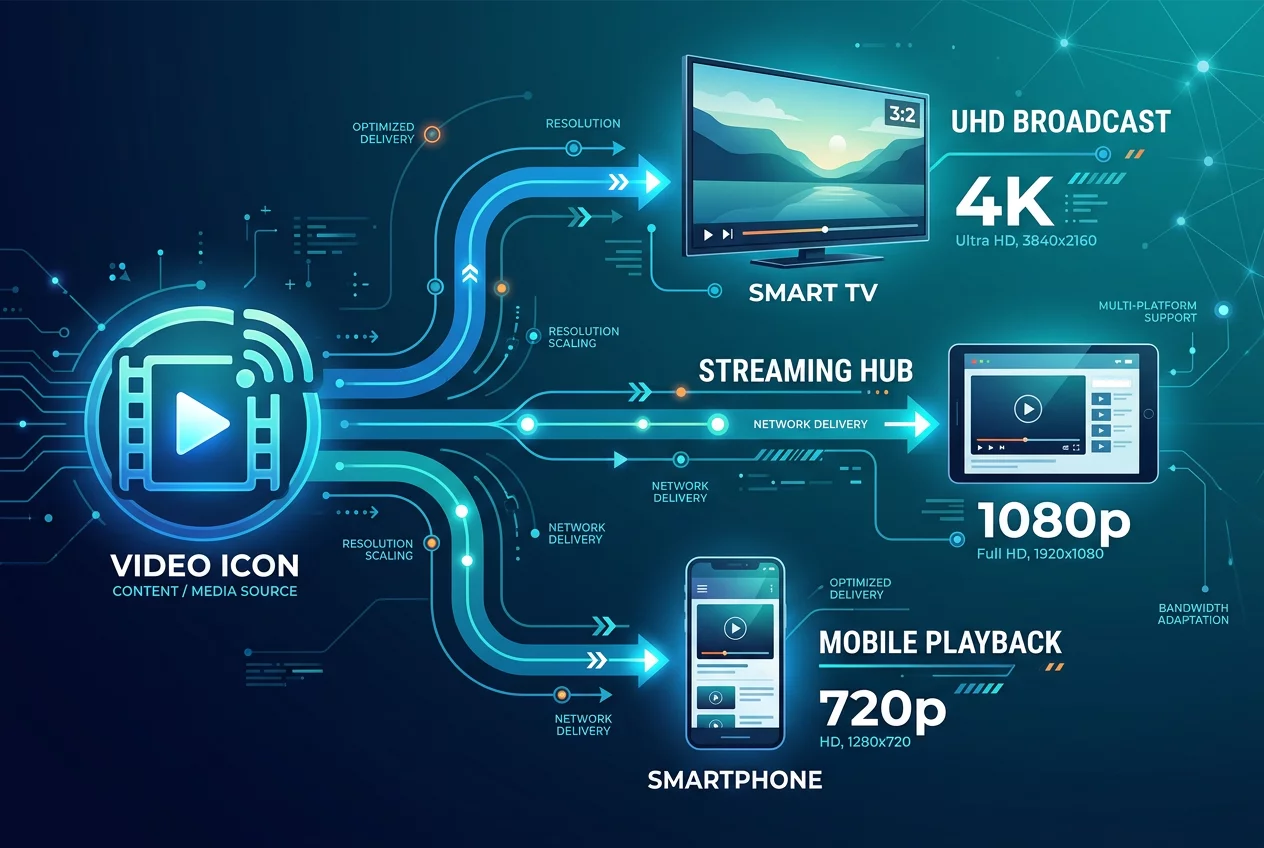
Delivering the Best Quality for Every Screen
Internet connections vary wildly between users and locations. A viewer on a high-speed fiber connection expects a crystal-clear 4K image, while someone on a crowded public Wi-Fi network needs a stable, stutter-free experience. Dynamic Adaptive Bitrate (ABR) packaging addresses this disparity. The software creates a ladder of video renditions at different resolutions and bitrates. When a viewer hits play, the player monitors their bandwidth in real-time. The system then delivers the highest quality version that the current connection can support. If the network speed drops, the stream automatically switches to a lower bitrate rendition without pausing the video. Turnexedic manages this complex logic with precision, ensuring a smooth transition between levels.
The Core of Modern Streaming
ABR packaging serves as the backbone for HLS (HTTP Live Streaming) and DASH (Dynamic Adaptive Streaming over HTTP). The software takes the source video and breaks it into small segments, usually between two and ten seconds long. It then encodes each segment at multiple quality levels. Manifest files act as the map for the video player, listing all available versions and their locations. This architecture allows for massive scalability, as standard web servers and Content Delivery Networks (CDNs) can serve these small files just like any other static data. The burden of high-concurrency streaming shifts from the central server to the edge of the network, closer to the users.
Optimizing the Encoding Ladder
Creating an efficient encoding ladder involves a careful balance. Too many rungs lead to high storage costs, while too few rungs cause jarring transitions for the viewer. Follow these guidelines for a balanced setup:
- Start with a low-resolution thumbnail version for ultra-slow connections.
- Include several 720p and 1080p options with varying bitrates.
- Ensure that the I-frame intervals are consistent across all renditions.
- Use a content-aware encoding approach to save bits on simple scenes.
Seamless Transition Technology
Visual artifacts during quality switches can ruin the immersion of a film or live broadcast. Turnexedic employs advanced alignment techniques to make these switches invisible. Every rendition in the ABR ladder shares identical GOP (Group of Pictures) structures and frame timestamps. When the player requests a different quality level, the switch occurs exactly at a segment boundary. This synchronization prevents flickering, frame skips, or audio desync issues. Viewers remain focused on the content, unaware of the complex technical adjustments happening behind the scenes. This reliability builds trust and increases audience retention for streaming platforms.
Cost-Effective Storage Management
Storing multiple versions of every video file can quickly consume storage budgets. The software offers tools to manage this growth effectively. Intelligent cleanup policies remove rarely accessed renditions or older formats. Just-in-time packaging allows for the creation of HLS or DASH manifests from a single source file on demand, reducing the total footprint. By optimizing the way data is stored and delivered, Turnexedic helps companies maintain a high-quality service while controlling infrastructure expenses. The packaging system is designed for the modern web, where flexibility and performance go hand in hand.
If you can envision it, then we can build it.
Contact Us
Turnexedic
Turnexedic is a software provider focused on media processing technology. We offer tools for video transcoding, helping businesses manage digital content efficiently. Our platform supports various formats and delivery standards globally.
Menu
Contacts
-
- Location:
- 8793, West Dahlia Drive, Peoria, 85381, United States
-
- Phone:
-
- E-mail:
- turnexedic-subscribe@yahoo.com