The Evolution of 8K Video Delivery
07.12.2026Miles Lopez
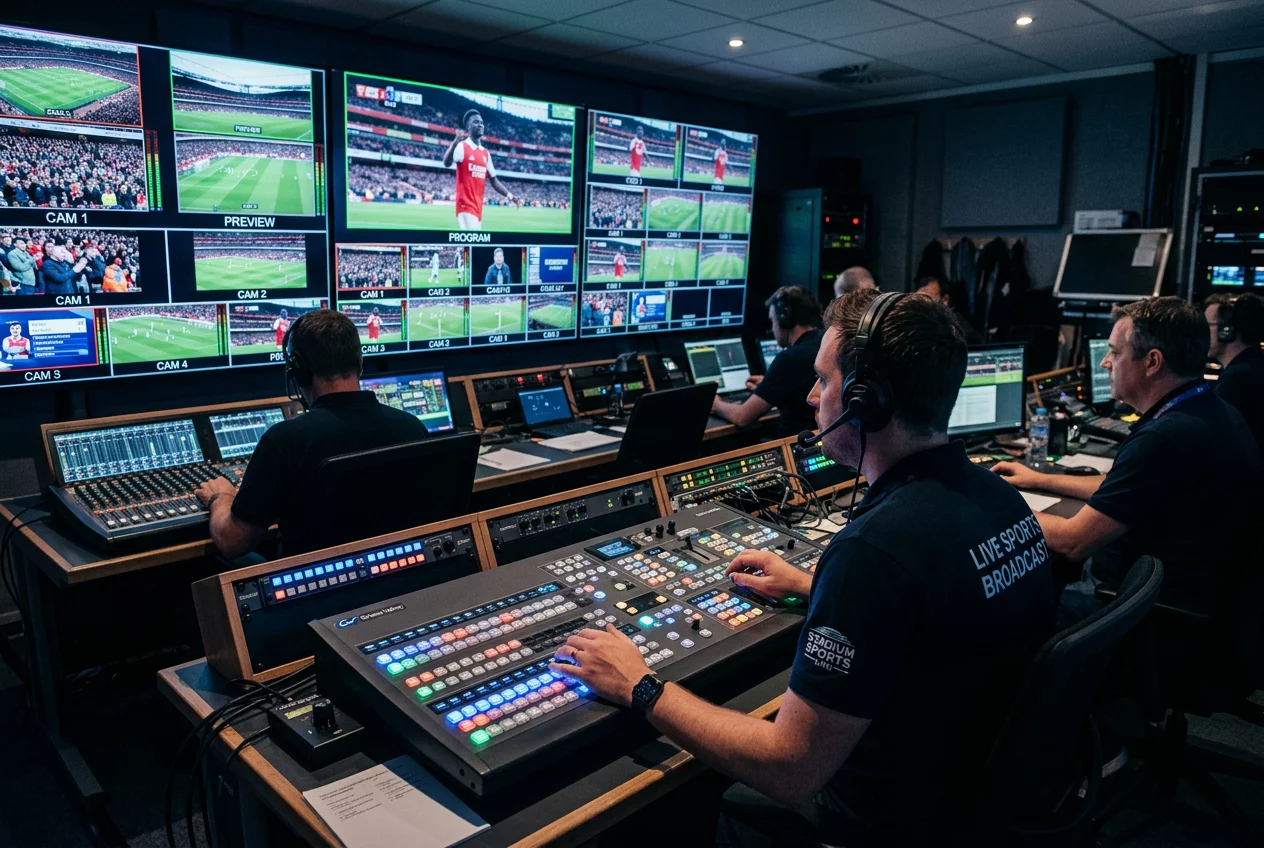
Latency remains the single greatest hurdle in live broadcasting, especially as events reach a global scale. When a viewer in London watches a live football match happening in Tokyo, they expect the action to be near-instantaneous. However, the path from the camera to the screen involves multiple steps: encoding, packaging, distribution through a CDN, and finally decoding on the user's device. Each of these stages adds precious seconds to the delay. For interactive content like sports betting or live auctions, a delay of even five seconds can ruin the experience. Turnexedic tackles this problem by optimizing every microsecond of the transcoding process, ensuring that data moves as quickly as the speed of light allows through the network infrastructure.
Traditional streaming protocols like HLS and DASH were designed for stability, not speed, often resulting in delays of 30 seconds or more. New protocols have emerged to solve this issue. SRT (Secure Reliable Transport) and WebRTC offer ways to transmit video with sub-second latency, even over unpredictable networks. LL-HLS (Low-Latency HLS) provides a middle ground, maintaining the compatibility of standard HLS while drastically reducing the buffer size. These protocols work by breaking the video into much smaller chunks, allowing the player to start decoding before the entire segment has arrived. To minimize delay in your broadcast, take these actions:
The transcoding stage is often where significant delays occur. Converting a high-resolution raw feed into multiple bitrates takes time, particularly if the software is not optimized for speed. Modern solutions use parallelization to handle multiple tasks at once. Around the central processing unit, specialized hardware encoders take over the heavy lifting, completing the conversion in a fraction of the time required by software-only approaches. Turnexedic's architecture is designed to minimize 'hand-off' time between different stages of the pipeline. By keeping the data in high-speed memory rather than writing it to disk between steps, the system shaves off valuable milliseconds that add up over the course of a global broadcast.
Distributing video from a single central server to the entire world is a recipe for high latency. Edge computing moves the processing power closer to the end user. Instead of sending every request back to a primary data center, local edge nodes handle the final packaging and delivery. In it, the video is tailored to the specific needs of the local network, accounting for regional variations in bandwidth. This decentralized approach reduces the physical distance the data must travel, significantly lowering the 'time to first frame.' Furthermore, edge nodes can perform local transcoding, creating lower-resolution versions only when requested by a user in that specific region, which saves backbone bandwidth and reduces overall system load.
As 5G networks become more prevalent, the potential for ultra-low latency broadcasting expands. The higher speeds and lower ping times of 5G complement the advancements in transcoding software, making it possible to deliver 4K live streams with almost no perceptible delay. We are moving toward a world where 'live' truly means live, regardless of where you are on the planet. Turnexedic continues to innovate in this space, developing even faster algorithms that can predict network congestion and adjust encoding parameters before the delay even happens. This proactive approach to latency management ensures that broadcasters can provide the most engaging and responsive experiences to their audiences, fostering a sense of real-time connection across the globe.

Ivan Parker
SRT is great, but make sure your hardware decoders support it properly, otherwise you just trade latency for compatibility issues.

Colin Stephens
I hate it when I hear my neighbors cheer for a goal 10 seconds before I see it on my stream. This tech can't come fast enough!

Turnexedic is a software provider focused on media processing technology. We offer tools for video transcoding, helping businesses manage digital content efficiently. Our platform supports various formats and delivery standards globally.
Clara Freeman
Latency is the bane of my existence. We tried switching to SRT recently and it made a huge difference for our remote commentators.